

 English

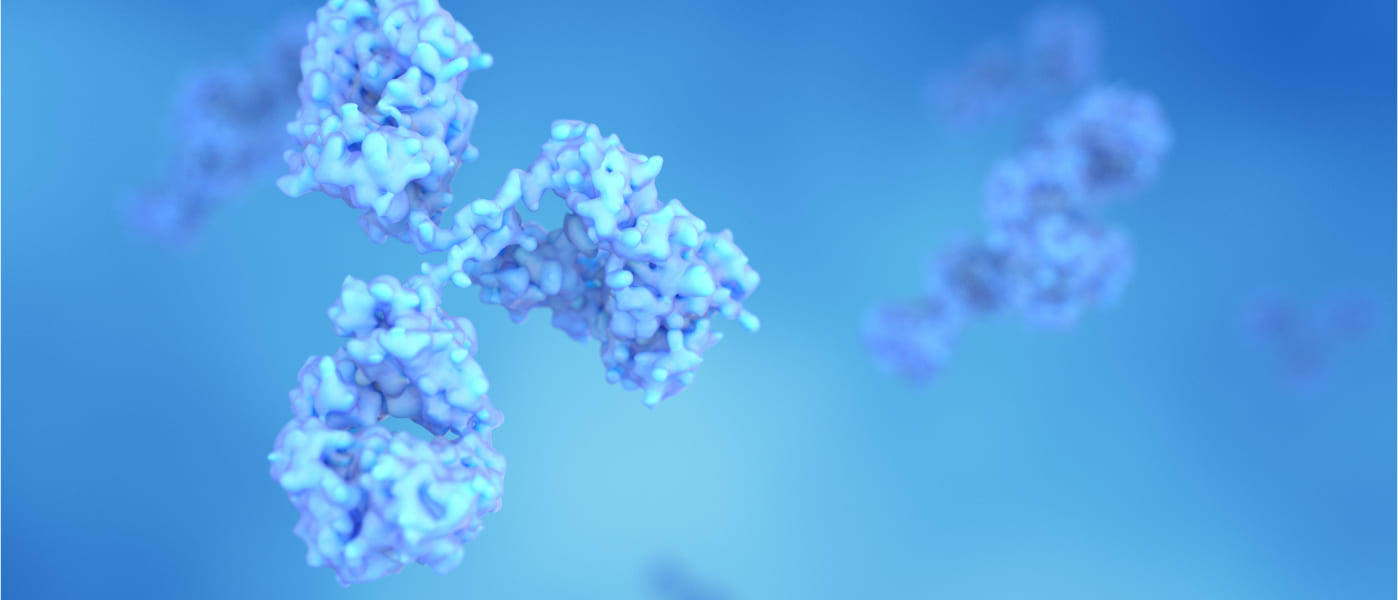
Antibodies are essential components of the immune system, serving as highly specific proteins that recognize and neutralize foreign substances. This remarkable ability has been harnessed by scientists to develop recombinant antibodies that are used in therapeutic, diagnostic, and research applications. To meet different needs, various antibody formats have been developed, including:
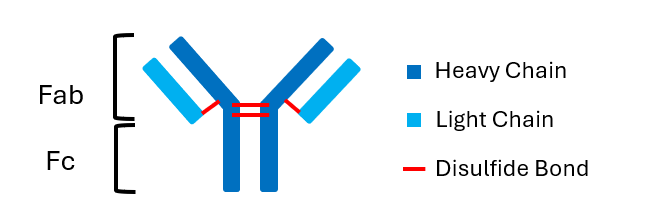
Antibodies consists of heavy and light chains, linked with disulfide bonds. Its regions are classified into Fab (fragment of antigen binding) and Fc (fragment of crystallization).

Monoclonal antibodies
Originates from a single clone of cells, and therefore, recognize the same epitope (specific part of an antigen). They currently represent the largest segment of the biologics drug market.

Single-chain Variable Fragments
Single-chain variable fragments (scFv) are engineered antibodies consisting of a single polypeptide chain that retains the antigen-binding capability of the original antibody. It contains only the variable regions of both the heavy and light chains.

Multi-specific antibodies
Engineered to bind to two (bispecific) or more (tri or tetraspecific) targets simultaneously. This enables them to modulate complex biological processes, offering enhanced therapeutic potential.

Antibody drug conjugates
(ADCs) combine the specificity of monoclonal antibodies with the potency of cytotoxic drugs. They are mostly used in oncology applications, where the ADC in internalized by the cancer cell to release its toxic payload.



Antibody Expression

Transfection
The introduction of vectors encoding antibodies into host cells (e.g. Chinese Hamster Ovary) is achieved through chemical, electroporation, or viral vector methods.

Selection
The cells are subjected to selective pressure to isolate those that have successfully integrated and are expressing the antibody genes.

Evaluation and Expansion
The clones are evaluated based on the quality of the antibodies they produce, and the best-performing clones are selected for further evaluation and expansion.

Optimization and Scaleup
Culture conditions are optimized, and the highest-producing clones are selected for cell banking and large-scale production.
Antibody Purification
Harvest
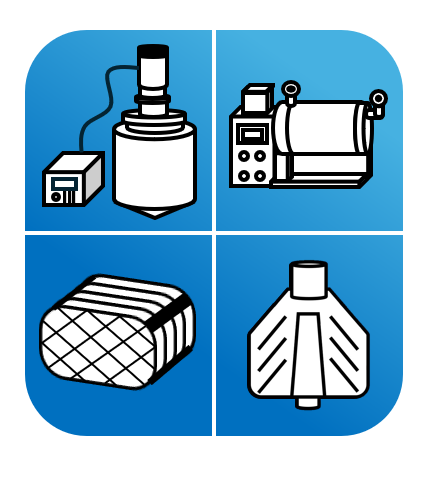
Harvesting antibodies from the culture medium involves separating the harvest supernatant from cells and cell debris, typically using filtration, centrifugation, or a combination of both.
At smaller scales, lab-scale filters and centrifuges are used. Whereas manufacturing-scale operations often involve filter holders and disc-stacked centrifuges.
Chromatography
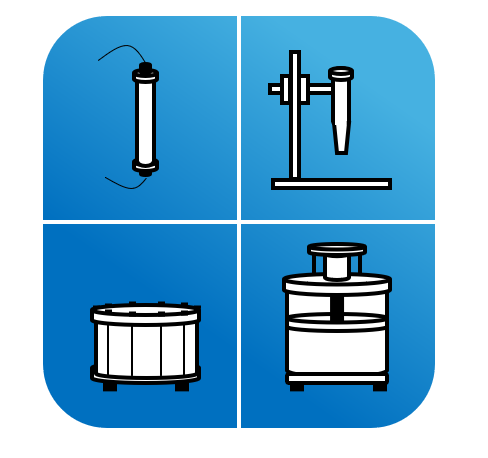
Chromatography is a key technique for purifying antibodies. The antibody-containing solution is passed through a column packed with material that selectively binds to the target antibody. Conditions in the column are then adjusted by applying different buffers, which selectively elute the antibodies.
Product and process related impurities are separated during purification.
Examples of impurities include:
- Antibody Aggregates (generated during culturing and processing)
- Antibody fragments or degraded antibodies
- Leached Protein A (from Protein A chromatography)
- Host Cell Proteins (HCP)
- Host Cell DNA (HcDNA)
- Viral Contaminants
- Culture Media Components
Chromatography columns can be packed with different types of chromatography media or purchased as pre-packed columns, available for both small- and large-scale applications.
Others
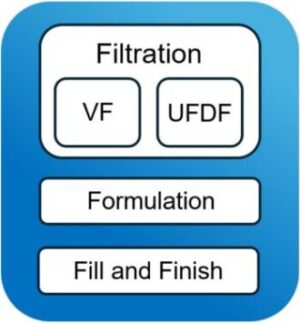
Other unit operations involved in antibody purification include Virus Filtration (VF), Ultrafiltration and Diafiltration (UFDF), Formulation, and Fill and Finish. These steps help concentrate the antibody and formulate it into the final product for use.
CHT™ Ceramic Hydroxyapatite Media Purification of Antibodies
CHT Ceramic Hydroxyapatite Media is widely recognized for its effectiveness in purifying antibodies. Its superior ability to remove aggregates and other impurities makes it an essential tool in antibody purification workflows. The following highlights examples of antibody purification processes utilizing ceramic hydroxyapatite media,
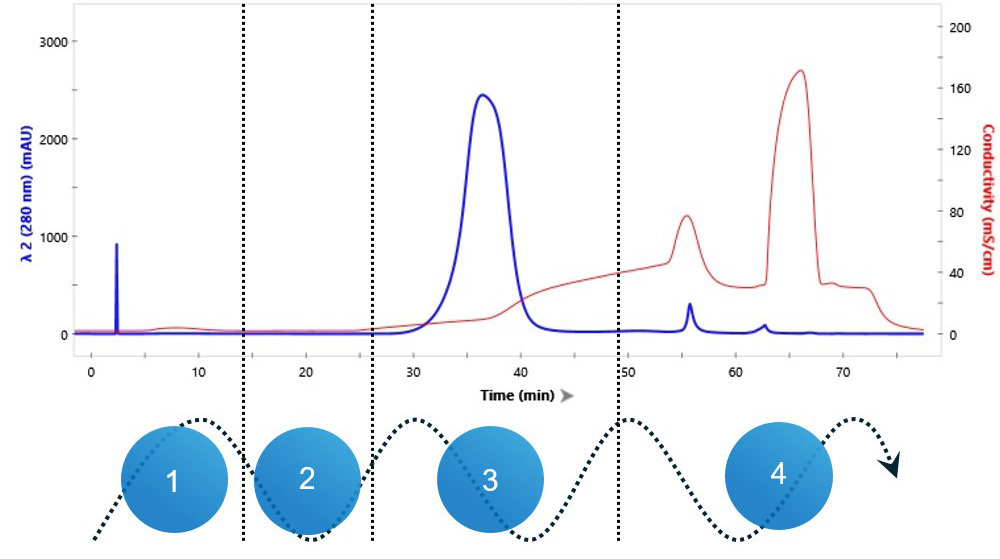
A general purification of antibodies with CHT Ceramic Hydroxyapatite Media encompass the following phases:
- Loading Phase (Antibody is loaded onto the column)
- Washing Phase (Low conductivity/phosphate concentration to remove loosely bound impurities)
- Elution Phase (Conductivity/phosphate concentration gradually increased (gradient elution) is used when a process is undefined. A step elution buffer is used instead if the optimal condition has been found.
- Strip and Sanitization Phases A high concentration of phosphate is used to strip any tightly bound impurities, followed by sodium hydroxide for sanitization. Finally, the column is regenerated for the next cycle.
White text
Resource Library
-
Overcoming Bispecific Antibody Purification Challenges with CHT™ Ceramic Hydroxyapatite Media
This application note summarizes a study that investigates the benefits of CHT Ceramic Hydroxyapatite Media, versus the traditional CEX resin in bsAb purification.
-
An Alternative Two-Step Mixed-Mode Approach to a Monoclonal Antibody (mAb) Purification Process
Explore reducing the number of steps in purification workflow for higher yields, shorter processing times and improved process economics.
